High-Mileage Used Van: How to Choose the Right One Without Regrets
A used van with 200,000 km on the clock can still cover another 150,000 km without major issues—provided you pick the right model and steer clear of common pitfalls. Contrary to popular belief, mileage alone doesn’t determine how much life a vehicle has left. For instance, a 2018 Ford Transit Custom 2.0 TDCi EcoBlue often exceeds 250,000 km without requiring major repairs. Here’s how to secure your purchase, verify its history, and make the most of the tax benefits.
1. High mileage: a risk or an opportunity?
High mileage (over 150,000 km) doesn’t necessarily mean a van is at the end of its life. Modern diesel engines, like Ford’s 2.0 TDCi EcoBlue or Peugeot’s 1.6 BlueHDi, are built to last 300,000 km or more. The real risk lies in a patchy service history or a tampered odometer. According to the DGCCRF (French Directorate General for Competition Policy, Consumer Affairs and Fraud Control), this type of fraud affects 5–10% of used vehicles in France.
For professionals, a high-mileage van can mean significant savings. The purchase price is often 30–50% lower than that of a newer model. What’s more, the tax benefits remain attractive: exemption from the TVS (French company vehicle tax) for CTTE-classified vehicles (commercial vehicles) and VAT recovery on long-term leases.
How to check if the mileage is genuine
Ask for the service book: a full history (servicing, part replacements) is the best indicator of reliability. Check that the recorded mileages match the dates of the work carried out.
Check the vehicle history report using services like CarVertical or HistoVec (free, provided by the French Ministry of the Interior). These tools cross-reference data from MOTs (French *contrôle technique*) and garages to spot inconsistencies.
Inspect wear and tear: a steering wheel, pedals, or gearstick that look too new for the stated mileage could indicate odometer fraud. Also compare the condition of the tyres and brakes with the declared mileage.
Get an electronic diagnostic: a mechanic can read the engine control unit’s memory, which logs the actual mileage. Some models, like the Renault Kangoo, store this data in a tamper-proof chip.
If you discover the mileage has been tampered with after purchase, the law protects you. You can take legal action for hidden defects or fraud. As a result, courts often order sellers to refund the buyer—even if they themselves were victims of odometer tampering by a previous owner.
2. Which models should you choose for high mileage?
Not all vans are created equal when it comes to high mileage. Here are the most reliable models, based on professional feedback and reliability data.
Model
Engine
Average mileage before major failure
Points to watch
Reliability score (out of 10)
Ford Transit Custom (2018+)
2.0 TDCi EcoBlue 130–170 hp
250,000+ km
No recurring issues
8.5
Renault Kangoo Van (2021+)
1.5 dCi 75–110 hp
200,000 km
Brake pads (urban use), head gasket (180,000+ km)
8
Peugeot Expert (2016+)
1.6 BlueHDi 120–145 hp
200,000 km
Head gasket (165,000+ km), DPF clogging (short journeys)
7.5
Citroën Jumpy (2016+)
1.6 BlueHDi 120–145 hp
200,000 km
Head gasket (160,000+ km), DPF cleaning
7.5
Citroën Berlingo (2008–2018)
1.6 HDi
150,000–200,000 km
Vacuum pump, clutch, turbo, 2023 recall for fuse box
6
Source: Utilitaire Magazine, Fiches Auto
On the other hand, some models should be avoided even with moderate mileage. This includes the Mini Countryman (R60 generation), whose timing chain and oil consumption issues can end up costing more than the vehicle’s residual value.
Where to buy a reliable used van
Domaine auctions: the website encheres-domaine.gouv.fr offers vans from public-sector fleets. These are often well maintained, and their mileage is verified. Prices are usually lower than the market average.
Specialist dealerships: networks like Distinxion or Jean Lain Occasions provide extended warranties (up to 24 months) and serviced vehicles. Opt for professionals who supply a full history and an electronic diagnostic.
Online platforms: Leboncoin or La Centrale remain options. Always insist on a history report (HistoVec) and an MOT (*contrôle technique*) less than six months old. Be wary of deals that seem too good to be true (e.g., “10 km, like new”). These vehicles are often ex-rental stock or refurbished models with reset odometers.
3. Tax benefits: how to optimise the purchase of a used van
A used van can come with significant tax advantages. Here are the key points to consider when optimising your purchase.
TVS exemption and VAT recovery
Light commercial vehicles (classified as CTTE on the registration certificate) are exempt from the TVS (French company vehicle tax), regardless of their engine type. This exemption applies to both purchase and long-term leasing (LLD). With LLD, lease payments are fully deductible from taxable profits. VAT is also 100% recoverable if the vehicle is used exclusively for business purposes.
For non-commercial company vehicles (VP), the TVS applies on a sliding scale. It ranges from €2,000 (up to 3 tax horsepower) to €6,500 (from 16 tax horsepower). The ecological penalty (*malus écologique*) can reach €80,000 for new vehicles emitting over 192 g/km of CO₂. This threshold was lowered to 108 g/km in 2026.
Ecological bonus: an incentive scrapped for businesses
Since 1 January 2025, the ecological bonus for purchasing a vehicle (electric or hybrid) has been completely scrapped for legal entities. This measure, introduced by Decree No. 2024-1084, applies to both passenger and light commercial vehicles. Only private individuals can still benefit from it.
Depreciation and tax deductions
A used van can be depreciated over 4–5 years, depending on its age and mileage. Businesses can deduct the full purchase price (excluding recoverable VAT) from their taxable profits. To do this, follow the rules for declining-balance or straight-line depreciation. For a vehicle over five years old, depreciation is usually straight-line over five years.
4. Licence, registration, and administrative procedures
Driving a used van requires compliance with certain legal obligations. Here’s what you need to know about licences and registration.
Which licence do you need to drive a van?
A category B licence is sufficient to drive a van with a GVW (Gross Vehicle Weight) of no more than 3.5 tonnes. This rule also applies if the vehicle carries a maximum of nine seats (including the driver). It covers most compact vans (Renault Kangoo, Peugeot Partner) and light commercial vehicles (Ford Transit Custom, Citroën Jumpy). However, a category C licence is required for vehicles exceeding 3.5 tonnes.
Changing the registration certificate after purchase
After buying a used van, you have one month to change the registration certificate (*carte grise*) to your name. After this period, you risk a fine of €135–750. Here’s what you need to do.
Prepare the documents: Cerfa form 13750*08, proof of address less than six months old, the previous registration certificate crossed out and signed (“sold on [date]”), and an MOT (*contrôle technique*) less than six months old (if the vehicle is over four years old).
Submit the application online via the immatriculation.ants.gouv.fr website. Processing usually takes 7–10 days. The new registration certificate is sent within 3–5 working days after validation.
Pay the fees: the minimum cost is €13.76 (fixed tax of €11 + €2.76 fee). On top of this, there’s the regional tax, calculated based on tax horsepower. For a van, the total cost typically ranges from €200 to €500, depending on the region and vehicle.
5. Maintenance and warning lights to watch
A high-mileage van requires rigorous maintenance. Here are the key points to monitor to avoid costly breakdowns.
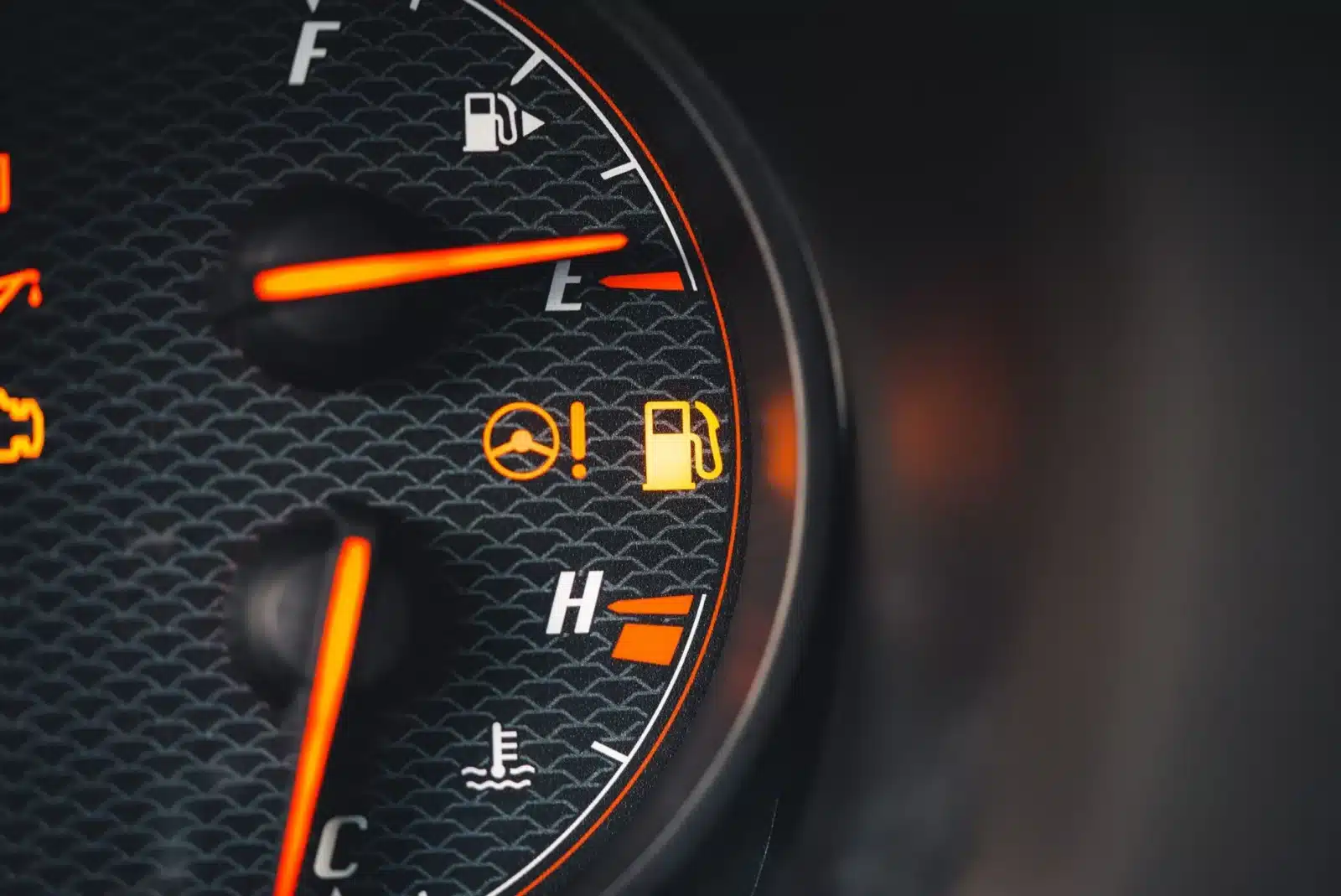
Critical warning lights
Warning light
Colour
Meaning
Recommended action
Spanner
Orange
Maintenance due (mileage or time interval reached)
Schedule a service as soon as possible.
Engine
Orange
Engine or emissions fault (e.g., DPF clogging)
Get the vehicle diagnosed quickly.
Oil
Red
Low oil level or insufficient pressure
Stop the vehicle immediately and get it checked.
Brake
Red
Braking system issue (low fluid level, worn pads)
Have the braking system inspected without delay.
Source: Fiches Auto
Routine maintenance: parts to replace regularly
Brake pads and discs: replace every 40,000–50,000 km for intensive urban use (e.g., Renault Kangoo).
Diesel particulate filter (DPF): cleaning or replacement may be needed every 100,000–150,000 km. This mainly affects vehicles used for short journeys (e.g., Peugeot Expert, Citroën Jumpy).
Timing belt: replace every 100,000–160,000 km, depending on the model. Check the service book for the manufacturer’s recommendations.
Fluids: engine oil (every 15,000–20,000 km), coolant (every two years), brake fluid (every two years).
Tyres: replace when tread depth reaches 1.6 mm. For vans, opt for reinforced tyres (suitable load index).
6. Long-term leasing (LLD): an alternative to buying?
Long-term leasing (LLD) can be an attractive option for professionals. It eliminates maintenance hassles and the risks associated with high mileage. Here are its pros and cons.
Advantages of LLD
Predictable budget: monthly payments are fixed and often include maintenance, insurance, and breakdown cover.
Tax benefits: lease payments are fully deductible from taxable profits. VAT is 100% recoverable for vans used exclusively for business.
No depreciation risk: the vehicle is returned at the end of the contract, with no resale concerns.
Access to newer vehicles: LLD allows you to change vehicles every 3–5 years. This means lower mileage and manufacturer warranty cover.
Disadvantages of LLD
Mileage limits: LLD contracts usually set an annual mileage cap (e.g., 20,000 km). Exceeding this incurs penalties.
No ownership: the vehicle doesn’t appear on the company’s balance sheet. This can be a drawback for certain financial strategies.
Higher total cost: in the long run, LLD can work out more expensive than buying. This is particularly true if the vehicle is well maintained and kept for several years.
To choose between buying and LLD, assess your needs. If you cover a lot of ground (over 30,000 km a year) or plan to keep your vehicle for more than five years, buying may be more cost-effective. However, if you prefer to avoid maintenance hassles and drive a newer vehicle, LLD is worth considering.
The bottom line: should you buy a high-mileage used van?
Yes—provided you pick the right model and thoroughly check its history. A well-maintained Ford Transit Custom or Renault Kangoo can still cover another 150,000 km without major issues. The purchase price is far lower than that of a new vehicle. What’s more, the tax benefits (TVS exemption, VAT recovery) and deductibility of LLD payments make it an attractive option for professionals.
On the other hand, avoid models known for reliability issues (e.g., Mini Countryman R60). Also be wary of deals that seem too good to be true (unusually low mileage, underpriced). Always insist on a full history, an electronic diagnostic, and a recent MOT (*contrôle technique*). Finally, compare the total costs (purchase + maintenance vs LLD) to make the best choice for your business.
For more information, check out Choosing a van to select the right model. Also see how to compare a 3 m³ and 6 m³ van for your needs. If you’re torn between buying and leasing, our guide to pick-up truck tax benefits may help.