Home > Bike & New Mobility > Equipment & Anti-Theft
An anti-theft lock that gives way in 30 seconds, the bicycode marking requirement in place since 2021, inadequate lighting that leads to a fine—bike equipment is all about precise details. Budget matters less than choosing the right gear for the right situation: a budget lock used incorrectly sometimes offers less protection than a decent model fitted properly. Four practical guides help you pick the right lock, lighting, GPS tracker, and understand the marking requirement, based on real-world use: daily commuting, city riding, cargo bikes, or occasional trips.
Three key points keep coming up when you dig into the topic:
- A single lock, even a high-end one, is never enough against a determined thief with the right tools.
- Bicycode marking doesn’t prevent theft—it just makes it easier to return the bike once it’s found.
- Lighting and GPS trackers work together: one prevents accidents, the other helps recover the bike afterwards.
Bike Lock: Which One to Choose Against Theft
A cheap U-lock can sometimes give way in under a minute against bolt cutters or a portable angle grinder. Price matters, but the resistance standard (SRA, ART) matters more: two locks at the same price can hold out for very different lengths of time against the same tools. For a bike left on the street all day, as many commuters do, a good-quality U-lock paired with a short chain really reduces the risk—unlike a simple cable, which only deters opportunists in a hurry.
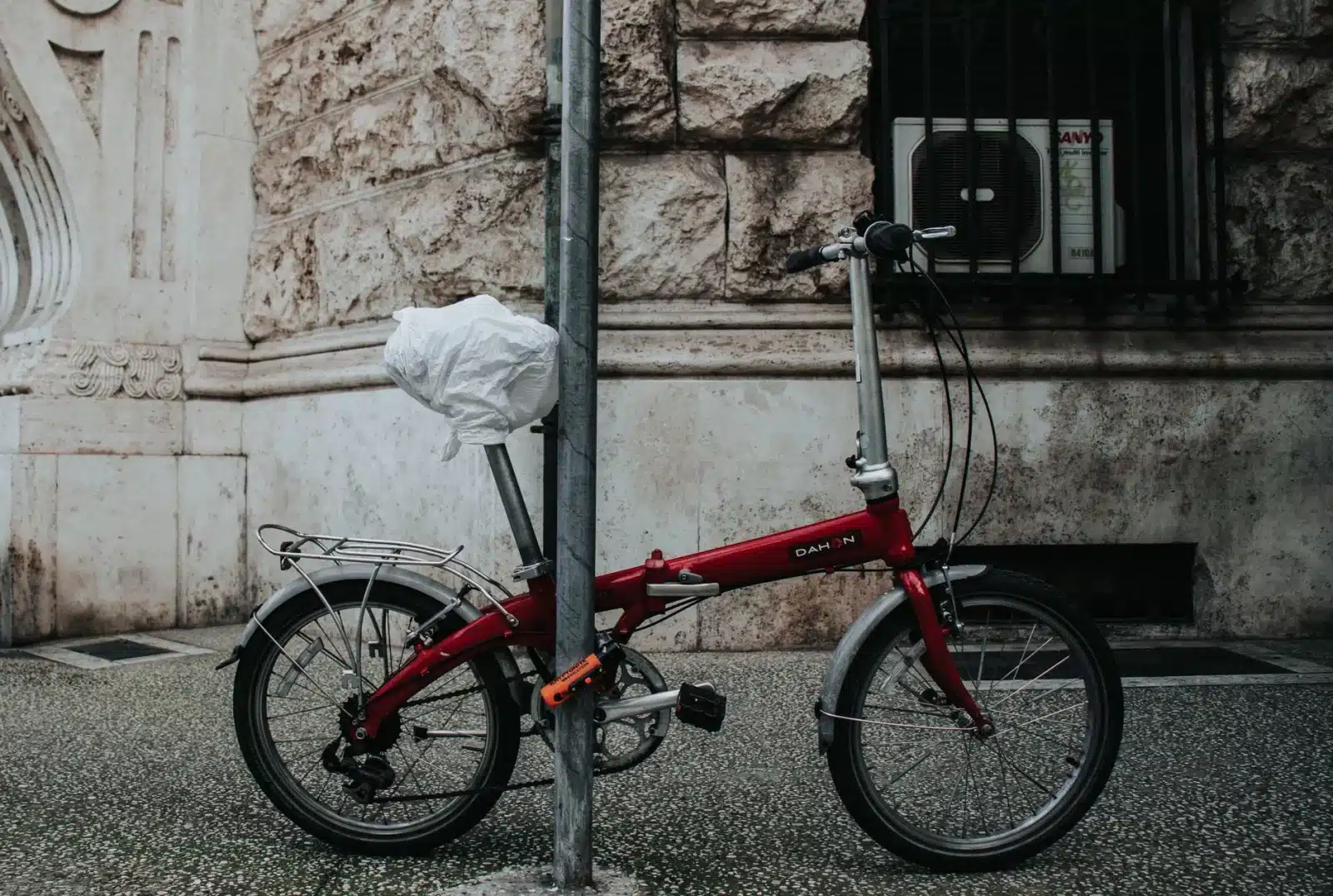
Weight also plays a part in the choice: a heavy-duty lock holds up better, but a commuter who carries it every day may end up leaving it at home every other morning. The U-lock bike lock comparison breaks down models that actually stand up to cutting tools, including their weight and price, to help find the right balance for long-term use rather than just on paper.
The type of locking mechanism also affects daily use. A keyed lock generally resists picking better than a combination model, but losing the key can mean having to break the lock yourself if you don’t have a spare. How you fit the lock matters just as much as the hardware: threading the shackle through the frame and front wheel, then securing it to a fixed ground anchor rather than just a fence, cuts the risk significantly before you even compare models.
Bike Lights: See and Be Seen
A white front light and a red rear light are mandatory as soon as visibility drops, not just in the dead of night. Many cyclists wait until winter to kit themselves out, even though the risk rises as early as late afternoon in autumn, when light fades quickly without you noticing.
Battery life, actual lumen output, and weather resistance make the difference between a light that lasts a week of commuting and one that cuts out in the first shower. A USB-rechargeable model also avoids the last-minute realisation that you’ve run out of batteries—something that matters on a tight student budget. The guide to the best bike lights compares models based on real-world performance rather than just the manufacturer’s specs.
On a cargo bike or one fitted with a child seat, lighting deserves extra attention: the extra weight increases braking distance, and better visibility at both ends partly makes up for the longer reaction time. Some parents even keep their lights on during the day on busy routes—a habit that barely affects battery life with modern batteries and helps reduce blind-spot risks for drivers.
Hidden GPS Tracker: Recovering a Stolen Bike
A sturdy lock deters thieves; a hidden GPS tracker helps you act after the fact. Tucked into the frame or under the saddle, it sends the bike’s location if it’s stolen, which makes a big difference later: filing a police report with a precise location rather than a vague description that often gets filed away.
The upfront cost is only part of the real expense: the annual tracking subscription, often overlooked at purchase, adds up more over time than the device itself. The hidden bike GPS tracker comparison breaks down battery life, location accuracy, and the true cost of the subscription for each model—a factor worth considering before you buy.
Where you place the tracker directly affects how well it works against theft. A device visible under the saddle can be removed in seconds by an experienced thief, whereas a tracker slipped into the head tube or built into the rear light goes unnoticed without taking the bike apart. That discretion comes at a cost: the hardest-to-spot models often require more technical installation, sometimes best left to a bike shop rather than a five-minute DIY job.
Bicycode Marking: A Requirement Since 2021
Since 1 January 2021, every new bike over 16 inches sold by a professional must carry a unique identifier, engraved or affixed, registered in the Fichier national unique des cycles identifiés (French national register of identified bikes). This bicycode marking doesn’t replace a lock: it makes it easier to return the bike if the police recover it after a theft or during a routine check.
The question often comes up for second-hand bikes bought privately or older bikes never marked. The guide to mandatory bicycode marking explains who needs to get their bike marked, where to get it done, and what changes in practice for a bike already registered under a previous owner.
Maintaining Your Lock So It Lasts
A lock isn’t a one-off purchase you can forget about for a decade. The mechanism clogs up with rain and winter road salt, and a stiff lock can lead some cyclists to force the key until it breaks—or worse, leave the lock unlocked out of sheer frustration. A drop of light oil in the barrel once or twice a year, and a rinse with fresh water after a salty winter, is enough to avoid this kind of preventable failure. A lock that refuses to open on a rushed morning can lead more than one cyclist to stop using it altogether, which defeats the whole purpose of buying it in the first place.
Which Equipment for Which Bike Use
A daily commuter who leaves their bike outside for eight hours a day doesn’t have the same priorities as a parent who stores their child’s bike in the garage at night. A folding bike kept in a building hallway or taken on public transport doesn’t need the same level of security as one left on the street: marking and a lightweight lock are often enough, since the bike rarely strays far from its owner’s sight. On the other hand, a road bike or a high-end e-bike left in a station car park all day justifies the heaviest investment—lock and tracker combined. This table gives a starting point for prioritising equipment based on the real situation, before diving into each dedicated guide.
| Bike Use | Priority #1 | Priority #2 |
|---|---|---|
| Daily commuting in the city | Certified U-lock | Reliable, rechargeable lighting |
| Bike left outside overnight | U-lock + secondary chain | Hidden GPS tracker |
| Cargo bike or high-end e-bike | Lock + tracker combo | Bicycode marking |
| Child’s bike or occasional use | Bicycode marking | Basic lock sufficient |
Where to Buy: Specialist Shop, Bike Shop or Supermarket
A lock or GPS tracker bought in a supermarket often costs less upfront, but the choice of certified models is limited, and the sales assistant rarely knows the details of resistance standards. A specialist bike or security shop may charge a few euros more, but they’ll steer you towards a model that actually suits your bike and neighbourhood—a piece of advice that pays off the day the lock really needs to hold. For lighting, trying it out in-store also lets you check how it fits on your handlebars before buying, which avoids many online returns.
Combine Protections Rather Than Relying on One
Specialist bike and motorcycle lock retailers all stress the same point: a single device, even a high-end one, will eventually give way to a thief with the right tool and enough time. The combination that works in the long run pairs a U-lock for the frame and front wheel, a secondary chain or cable for the rear wheel, and marking or a GPS tracker as a safety net.
The balance between security and ease of use matters just as much as raw strength: a lock that’s too heavy often ends up left at home rather than used every day. An informal rule among specialist retailers is to spend about 10% of the bike’s value on its lock—a useful benchmark to avoid securing a €1,500 bike with a €15 padlock. User groups also publish resistance test comparisons that are worth checking before buying, as the differences between similarly priced models can be huge.
A theft reported to the insurance or police moves much faster with a serial number or bicycode identifier to hand. Many owners only realise after the theft that they never noted this number, which complicates both the police report and the insurance claim. Taking a photo of your bike and keeping the marking reference somewhere other than on the bike itself takes five minutes and avoids this kind of nasty surprise.
Common Mistakes That Make Theft Easier
Locking your bike to a post that isn’t fixed to the ground, leaving the front wheel free without threading it through the lock, or fitting the lock too low where a crowbar can easily prise it open: these mistakes keep coming up in urban bike thefts.
- Lock fitted at ground level, easy to lever open with a simple tool
- Bike secured only by the front wheel, frame left free
- Low-end lock without certification, chosen for price alone
- Lock left open or poorly locked out of habit, which is as good as not having one
- No marking or tracker in place, making recovery harder if the bike is stolen
A properly protected bike combines a good anchor point, a certified lock, and a digital or physical identifier that helps identify it afterwards. To explore the wider world of active travel, the bike & new mobility page is a good starting point for commuting guides, e-scooters, and regulations.