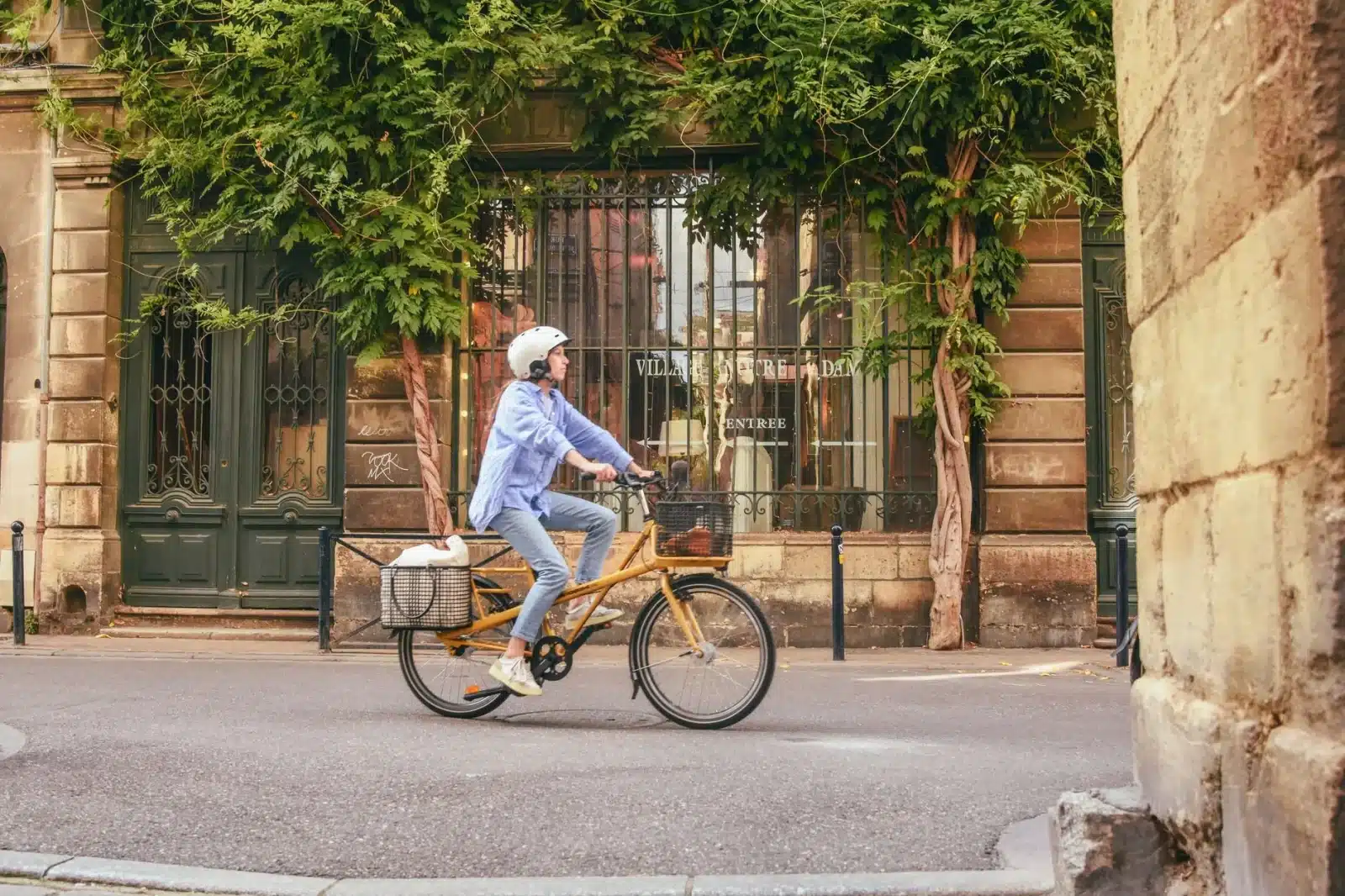
This cycle-commuting sub-section is made up of four guides: where to start, how to plot a safe route, when to opt for a folding bike on the train, and what maintaining an e-bike really costs through the seasons. Each one tackles a specific stage of your home-to-work journey.
Cycle commuting evolves with each stage: whether you’re pushing off for the first time or already two years in, your needs won’t be the same.
- Starting out calls for a suitable bike and a route tested outside rush hour—brand-new gear isn’t essential.
- A folding bike changes everything once the journey exceeds 10 to 15 km, thanks to the train + bike combination.
- Maintaining an e-bike hits the annual budget much harder than a conventional bike, with the battery and braking system leading the costs.
Starting cycle commuting without choosing the wrong gear
The first few weeks of cycle commuting kill more motivation than rain. The wrong bike, a slipping backpack, arriving sweaty in front of the open-plan office—every false start looks the same. That bike gathering dust in the garage for three years almost never cuts it, even on a flat route.

Our guide “Everything you need to know about starting cycle commuting” breaks down bike choice by terrain and distance, the clothes that save you changing at the office, and the order in which to invest when the budget is tight. A rear rack and panniers often cost less than an ergonomic backpack and protect your back far better in the long run.
An e-bike changes everything on hilly routes or beyond 8 to 10 km: it keeps you from arriving exhausted before the working day even starts. A conventional bike is perfectly adequate on flat urban routes, for a significantly lower entry cost.
The bike’s weight matters just as much as its price when you have to carry it into a basement bike room or up three steps in front of your building. A well-maintained second-hand bike, serviced by a bike shop, often costs two to three times less than an equivalent new model, without sacrificing day-to-day reliability. Mudguards and full lighting also prevent many a failed trip in October, when night falls at 6 pm and the rain sets in for the week.
Finding a safe route—the real challenge of cycle commuting
The bike you choose often matters less than the route you take. A poorly chosen route turns a 15-minute ride into a nightmare between buses, roundabouts and cycle lanes that suddenly stop halfway.
A cycling route-planning app calculates a path that prioritises segregated lanes and avoids main roads, even if it adds a few minutes. On a daily journey, those extra minutes are well worth the added safety.
Testing the route on a Sunday morning, without the pressure of the alarm clock, lets you spot the trouble spots before the first real day of cycle commuting: dangerous junctions, unlit sections, hills to avoid in the rain. Many new cycle commuters give up after a bad experience that could have been avoided beforehand—often in the very first week.
Two routes are always worth comparing before deciding: the shortest on the map, and the one that follows a segregated cycle lane even if it adds two kilometres. Over time, a slightly longer but protected route is less mentally draining than a shortcut squeezed between two lanes of traffic. The surface matters too: cobblestones or potholes wear out wheels and wrists much faster than a well-maintained path.
Folding bike and train: the combination that extends your cycle-commuting range
Beyond 10 to 15 km, cycling the whole way becomes a chore, especially in bad weather or when you’re tired. A folding bike taken on the train opens up a third option, somewhere between all-bike and all-public transport.
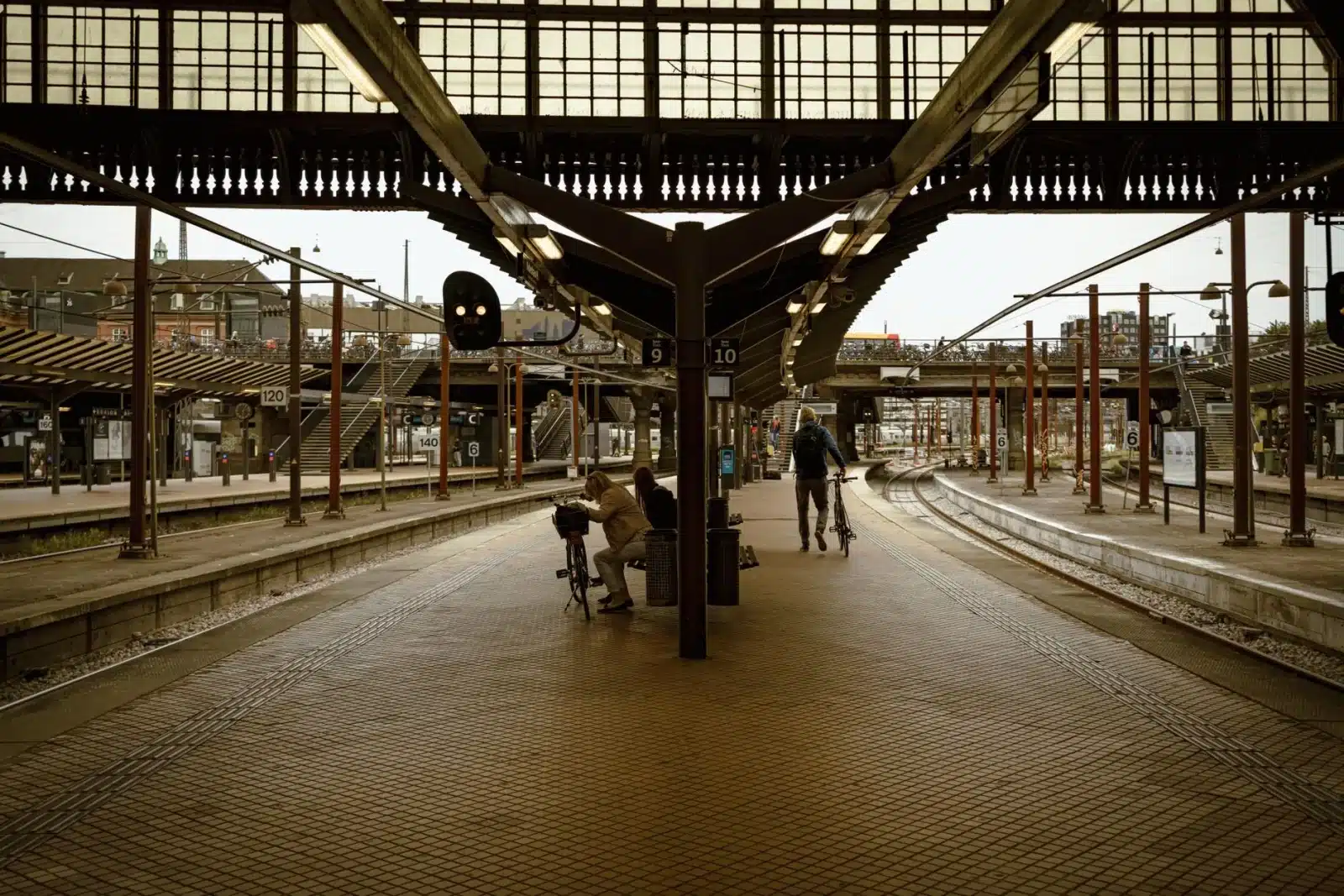
Our comparison “Everything you need to know about folding bikes and trains” details the models that glide through rush hour on TER or RER trains, and those too bulky for a packed carriage. Weight and folding time often matter more than the price tag in the shop.
This combination works particularly well for short home-to-station trips and lines poorly served by buses in the evening. A poorly chosen folding bike—too heavy to carry up the station stairs—quickly ends up forgotten in the garage.
The folding mechanism itself deserves a test run in the shop before buying, not just an online video. Ten extra seconds every time you board the train, repeated twice a day five days a week, soon take a toll on your morale. Some models fold in one motion, others require removing a wheel or folding a pedal—a detail that makes all the difference at rush hour.
E-bikes: what maintenance really costs over the year
An e-bike used every day for cycle commuting wears out faster than a leisure bike taken out on Sundays. Brakes, tyres, chain and battery take the cumulative mileage over twelve months, rain and frost included.
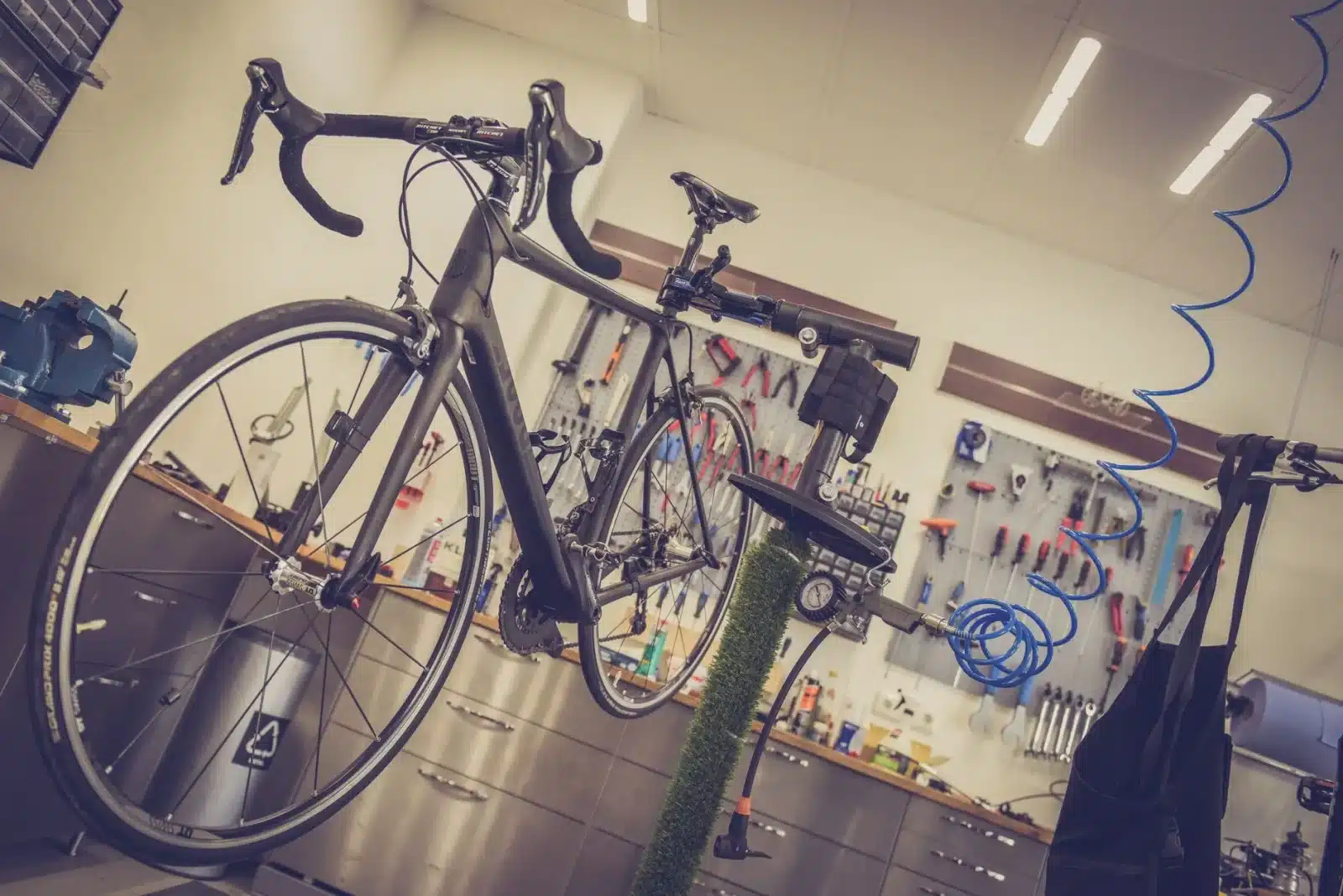
Our page “E-bike maintenance costs” breaks down the real annual budget, item by item, and the service intervals to follow to avoid a costly breakdown in the middle of the working week. When it comes to replacement costs, the battery often comes as the biggest surprise to new owners.
Compared to a car or even a public-transport season ticket, the annual cost of an e-bike soon looks modest, even after a full service at the bike shop and switching to puncture-proof tyres in the spring.
A few simple habits prevent most nasty surprises: inflating the tyres once a week, cleaning the chain after a rainy ride, avoiding leaving the battery completely flat for several days in a row. Adopt these early, and you’ll delay the next trip to the bike shop and cut the year’s maintenance bill significantly.
Protecting against theft: marking and locks for a bike used every day
A bike that leaves home every day spends far more time locked up on the street than a leisure bike kept in the garage. The risk of theft rises with how often you use it, especially outside a station or an office block without a dedicated bike room.
Since 1 January 2021, every new bike over 16 inches sold by a professional must carry a unique identifier, engraved or labelled, registered on the Fichier national unique des cycles identifiés (French national register of identified bikes). This marking makes it easier to return a stolen bike and complicates resale on the second-hand market. For a second-hand or older bike, you can still have this marking engraved voluntarily at an approved bike shop.
A sturdy lock remains the first line of defence in everyday life. A good-quality U-lock, secured to a fixed point rather than just a wheel, often costs less than a week’s replacement for a stolen bike. Two different types of lock on the same bike—a U-lock and a cable—significantly slow down an opportunistic theft in an unmonitored car park.
Sustainable mobility allowance: what your employer must (or needn’t) pay
Many cycle commuters count on the sustainable mobility allowance (forfait mobilités durables) to offset the cost of their bike or maintenance, only to discover how the scheme actually works.
Paying this allowance is entirely at the employer’s discretion: no law requires a company to offer it, even though the scheme exists at national level. Before building a tight cycle-commuting budget around this help, it’s best to check with HR whether the company has actually implemented it.
When the employer does offer it, the amount supplements the maintenance and equipment budget rather than replacing it entirely. A sustainable mobility allowance never covers the full cost of a new e-bike, but it does ease the bill over several years of cycle commuting. Some companies combine this allowance with partial reimbursement of a public-transport season ticket for rainy or tiring days—something worth checking at the start of your job rather than after the fact.
Cycle commuting in France: the gap between aspiration and reality
Cycle commuting is talked up far more than it’s actually practised. Many employees say they want to cycle to work, but few stick with it over time—caught between the weather, distance and the lack of showers at the office.
Cycling infrastructure is expanding in most major French cities, with segregated lanes and secure parking leading the way, which removes some of the historic barriers. The gap between intention and practice mostly comes down to the small details of daily life: a poorly adjusted bike, a route never tested in advance, inadequate rain gear from the first autumn weeks.
The mistakes that most often lead to giving up cycle commuting:
- Setting off with a bike unsuited to the route’s terrain, without ever trying an e-bike.
- Choosing the shortest route rather than the safest, at the expense of real safety.
- Neglecting basic maintenance (tyre pressure, brake adjustment) until a breakdown.
- Relying on an employer subsidy never verified before buying the bike.
These four pitfalls crop up in most accounts from cycle commuters who stopped after a few months. Conversely, those who stick with it for several years almost always tweaked their gear and route within the first few weeks, rather than waiting for a breakdown or a fall to react. For a broader look at other forms of soft mobility—scooters and shared transport included—the page Bikes & new mobility covers the whole section.