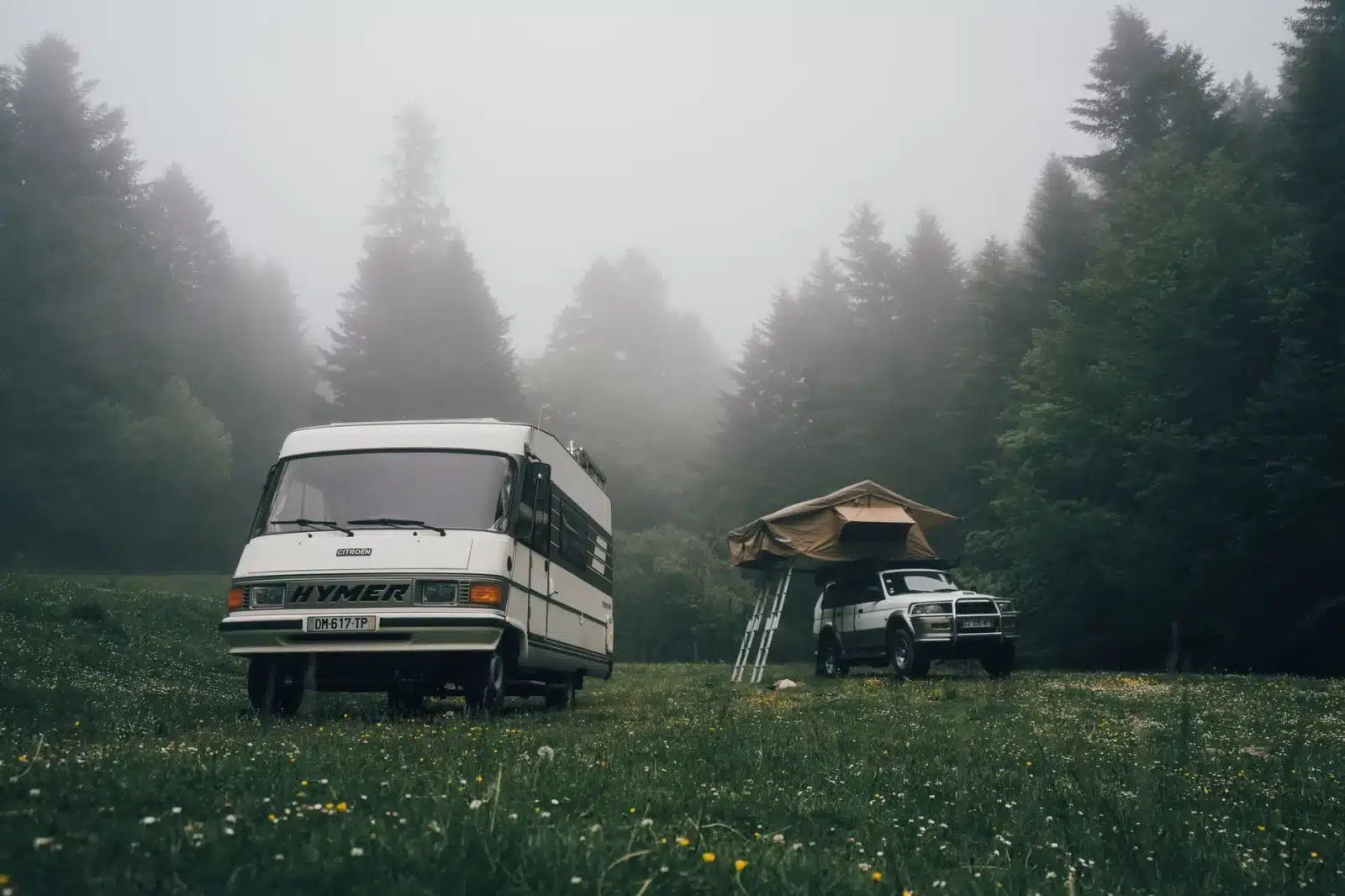
Motorhome Parking in Cities: Rules, Bans and Tips to Avoid Fines
Parking a motorhome in a city is perfectly legal. You can leave it on any standard parking space—unless a sign explicitly forbids it. But beware: 80% of fines issued to motorhome owners in urban areas aren’t for parking violations. They’re for « camping » on public roads. Setting up a table and chairs or extending an awning, for example, is against the rules. Here’s what the law actually says, how to spot the pitfalls, and what tricks to use to avoid penalties.
1. What the law says: parking vs. camping
French regulations clearly distinguish between two situations.
- Parking: leaving your motorhome in a parking space with the engine off. The vehicle must not take up more space than its size. This is allowed anywhere a car can park—unless a local by-law specifically bans it. However, such by-laws are often ruled illegal. More on that below.
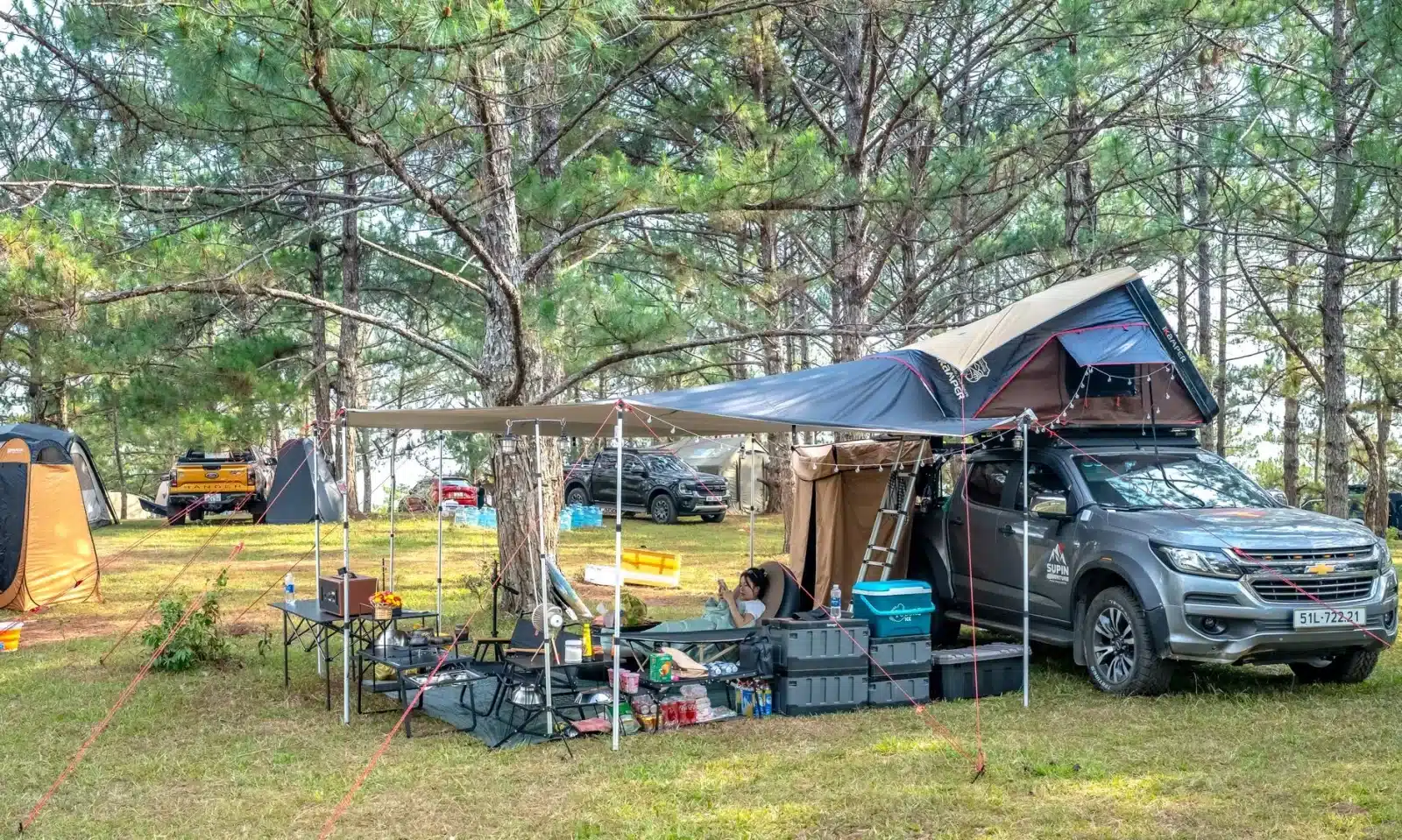
- Camping: turning a public road into a living space. Putting out chocks, setting up a table, or extending an awning? That’s not allowed. Even opening a window to air out a bed in the height of summer can land you a fine. The penalty is €35, rising to €75 if you pay late.
For a city weekend with two bikes on a bike rack, the rule is simple. Park like a car. Don’t take anything out of the living area. That way, you’ll be fine. If you fancy an aperitif outside, look for a dedicated motorhome area or a campsite. After all, the public highway isn’t an extension of your living room.
2. Local by-laws: often illegal, but how to challenge them?
Some towns put up signs saying « No motorhome parking » or « Motorhomes over 3.5 tonnes prohibited. » The problem? These by-laws are frequently overturned by administrative courts. They’re often deemed insufficiently justified or discriminatory.
The French Federation of Camping and Caravanning (FFCC) and the Senate have confirmed this illegality. Blanket bans are invalid—unless the local authority can prove motorhomes cause a specific issue, such as obstruction or a safety risk.
If you’re fined for illegal parking when you were parked like a car, you can appeal. Here’s how:
- Check that the local by-law is displayed at the town hall. It must be accessible to the public.
- Request a copy of the by-law via a request for administrative documents.
- If the by-law doesn’t justify the ban, you stand a good chance of winning. For example, a vague mention like « for safety reasons » without evidence isn’t enough. A formal appeal or administrative court can overturn the fine.
In practice, many local authorities prefer to drop proceedings. They’d rather avoid the risk of the fine being overturned—especially if you cite FFCC case law or the Senate’s response (written question no. qSEQ241001232).
3. Where to park in a city without risk?
Even if the law lets you park like a car, some areas are safer. Here’s where to leave your motorhome in a city:
- Public car parks: often paid, but no risk of a « camping » fine. Check the height clearance—motorhomes easily exceed 2.80 m.
- Motorhome service areas: some towns offer these free or at a low cost (€5-10 per night). They come with facilities like waste disposal or water. That way, you avoid conflicts with local residents.
- Industrial or commercial zones: on the outskirts, spaces are wide and less monitored. Avoid residential city centres—locals quickly report « suspicious » vehicles.
- Municipal campsites: an affordable option (€10-15 per night) for stress-free city stays. Some even accept late arrivals.
For a 10-day road trip with city stops, alternate between dedicated motorhome areas and public car parks. Avoid staying in the same spot for more than 24 hours—local authorities don’t like motorhomes hogging the same spaces.
4. Pitfalls to avoid (and how to get around them)
Some situations seem harmless. Yet they can land you a fine. Here are common traps and how to sidestep them:
| Situation | Risk | Solution |
|---|---|---|
| Taking out a folding chair to read on the pavement | Fine for « camping » (€35) | Stay in the vehicle or find a park. |
| Extending an awning to shelter from the sun | Fine for occupying public space (€75) | Use a built-in blind or park in the shade. |
| Emptying grey water on the road | Fine for pollution (up to €450) | Use the waste disposal points at dedicated service areas. |
| Double-parking « just for 5 minutes » | Fine for obstructive parking (€35) | Find a legal space, even if it’s further away. |
| Forgetting to pay the parking meter (even for 10 minutes) | Fine for non-payment (€17) | Use a mobile payment app (PayByPhone, etc.). |
Another trap: ZTL zones (Zona a Traffico Limitato) in Italy or Spain. Even if parked like a car, entering a ZTL without permission costs between €80 and €160. The fine often arrives months later—so you might get an unpleasant surprise after returning to France. If you’re staying at a hotel in a ZTL, ask the establishment to register your number plate.
5. Insurance and parking: what your policy covers (and doesn’t)
Your motorhome insurance covers damage to the vehicle in case of an accident or theft. However, some situations aren’t included:
- The bike rack and bikes: often not covered by default. If you’re carrying two bikes worth €1,500 each, check your policy. You might need « accessories » or « transported items » cover. Otherwise, an extension costs €20-50 per year.
- Fines: never covered by insurance, even with « fully comprehensive » policies.
- Damage caused by unsafe parking: parked your motorhome under a dead tree? A branch falls on it. Your insurer might refuse to cover the damage—it could be deemed negligence.
The average cost of motorhome insurance in France? Between €200 and €600 per year—that’s €17-50 per month. For a new motorhome costing €80,000, expect to pay €500-600 per year for fully comprehensive cover.
6. What to do if you get a fine
If you receive a penalty notice for illegal parking or « camping, » here’s what to do:
- Check the legality of the local by-law. If it’s illegal, you can appeal. The FFCC provides appeal templates for members.
- Pay within 15 days. You’ll get a 30% discount. For example, €35 instead of €50.
- Appeal if the fine is unfair. Send a recorded-delivery letter to the address on the notice. Include photos showing your vehicle parked like a car and proving no « no parking » sign was present.
- Make a formal appeal to the local authority. Many drop proceedings to avoid a court case.
For a three-week road trip with city stops, budget €50-100 for « fines. » Even if you follow the rules to the letter, some local authorities issue penalties as a matter of course.
7. Alternatives to city parking: stress-free overnight solutions
Want to avoid the risk of fines or sleep in peace? Here are the alternatives:
- Motorhome service areas: often free or low-cost (€5-10 per night). They offer facilities like water or waste disposal. Some are right in the city centre—like the Lyon Part-Dieu service area. Others are on the outskirts. Use apps like Park4Night or CamperContact to find them.
- Municipal campsites: affordable (€10-15 per night). They provide toilets and sometimes a pool. Some accept late arrivals.
- Supermarket car parks: some tolerate motorhomes for one night. Check the signs or ask the security guard. Chains like Lidl or Aldi are often welcoming.
- Couchsurfing or home swaps: platforms like Gamping or HomeCamper offer stays with locals. Expect to pay €10-20 per night for a garden or private parking space.
For a weekend in Paris with a 7-metre motorhome, the Porte de Saint-Cloud service area is a good option. It’s free and limited to 24 hours—but arrive early, as it’s often full.
What about abroad?
The rules vary by country. Here’s what you need to know:
- Spain: parking is allowed as in France. Local authorities can impose restrictions. Dedicated motorhome areas (áreas para autocaravanas) are plentiful and well-equipped.
- Germany: parking is allowed in public car parks. However, « camping » (setting up tables/chairs) is banned. Stellplätze (dedicated areas) cost €5-15 per night.
- Italy: watch out for ZTLs (Zona a Traffico Limitato) in city centres. Even if parked, entering a ZTL costs €80-160. Service areas (aree sosta) are often paid (€10-20 per night).
- Portugal: parking is generally tolerated. However, beaches and nature parks often ban motorhomes. Parques de campismo are affordable (€8-15 per night).
For a European road trip, budget €10-20 per night for parking. Download local apps to avoid nasty surprises.
In summary: the 5 golden rules for stress-free city parking
- Park like a car. No chocks, no awning, no table outside.
- Check the signs. A local by-law can ban motorhomes—but it must be justified. If not, appeal.
- Avoid residential city centres. Opt for public car parks or dedicated service areas.
- Don’t stay in the same spot for more than 24 hours. Even if it’s legal, local authorities don’t like squatters.
- Check your insurance. Bike racks, bikes, and accessories aren’t always covered.
With these rules in mind, a city weekend in your motorhome will go smoothly—and fine-free. Happy travels!