Pro-Level Van Conversion: How to Fit Out Your Van Like an Expert
A carpenter loads his tools into a Berlingo transformed into a mobile workshop. An electrician uses his Transit Custom as a plywood workbench. A pro-level van conversion optimises space. It also preserves tax benefits, such as the TVS exemption for CTTE vans. Here’s how to fit out a van without losing these advantages.
Solutions tested by pros, for pros.
Why choose a custom conversion over a commercial kit?
A standard plywood lining kit costs between €800 and €1,500. Yet it often comes with unsuitable dimensions. For example, for long tools or heavy loads. A tradesperson, on the other hand, designs custom racks. For a 1.20 m circular saw or a 50 kg compressor.
The result? Less time wasted securing items. Better weight distribution. Crucial for staying under the 3,500 kg GVW limit and keeping your category B licence. Indeed, a commercial kit is rarely removable without leaving traces. Holes or glue residue complicate reselling the vehicle.
A custom conversion, however, can be dismantled in under two hours. A key criterion for avoiding VASP approval. Especially if you use your van for family weekends. To explore other conversion & equipment options, modular solutions are growing in popularity.
Case study: an electrician fits out his Peugeot Expert
Jean, an electrician in Lyon, had his 2018 Expert fitted out. Here’s what he chose:
- A 18 mm marine plywood worktop. Fixed to aluminium rails to withstand vibrations.
- Sliding drawers for small equipment. Like terminal blocks or conduits. Lockable to prevent theft.
- A high shelf for fluorescent tubes. Accessible without bending down.
Total cost: €2,200. That’s €1,000 more than a standard kit. But with an estimated time saving of 1.5 hours per day. “Before, I wasted 20 minutes on every job looking for a tool. Now, everything’s within reach,” he explains.
On a 400 km trip with two bikes, this translates into a smoother day.

Which wood should you choose for a durable van lining?
Marine plywood (15 to 18 mm thick) is the most commonly used material. Its advantages:
- Moisture resistance. Ideal for vehicles exposed to rain or coolant leaks.
- Lightweight. A 1.22 x 2.44 m panel weighs around 30 kg. Compared to 50 kg for MDF.
- Price. Between €40 and €60/m². That’s 2 to 3 times cheaper than aluminium.
Alternative: birch plywood. More resistant to impacts. But less suited to damp environments. “For a works van, I recommend marine ply. For a craftsperson’s vehicle, birch is preferable,” says a carpenter.
Fixing: screws, glue or rails?
Three methods exist. Each with its pros and cons:
| Method | Advantages | Disadvantages | Cost (for a van like the Transit Custom) |
|---|---|---|---|
| Self-tapping screws + washers | Removable, sturdy | Risk of corrosion if screws aren’t stainless steel | €50-80 |
| Polyurethane glue (e.g. Sikaflex) | No drilling, watertight | Hard to remove, adds weight | €120-180 |
| Aluminium rails (Modul’Van system) | Adjustable, modular | Expensive, complex installation | €300-500 |
Tip: place rubber mounts between the wood and the bodywork. “Without them, the plywood eventually cracks around the fixings,” warns a bodywork specialist.
Van conversion and tax: how to keep your TVS exemption
A converted van remains exempt from TVS (tax on company vehicles). On one condition: keeping the CTTE designation on the vehicle registration certificate. For this, the conversion must:
- Be removable in under two hours. A criterion set by Matmut (a French insurance company).
- Not include a fixed bed or integrated kitchen. Otherwise, VASP approval is mandatory.
- Leave at least two seats at the front. For the driver and passenger.
“A tradesperson who installs a workbench and shelves keeps their CTTE status. If they add a bed for sleeping on jobs, they switch to VASP. They then lose the exemption,” explains an automotive tax expert. For a van used 80% of the time for work, this distinction can save €2,000 a year. For those considering a certified tow hitch for commercial vehicles, this vigilance is crucial.
Real-life case: a plumber loses his TVS exemption
Marc, a plumber in Bordeaux, had his Jumpy converted. Here’s what he installed:
- A fixed plywood worktop.
- Racks for pipes.
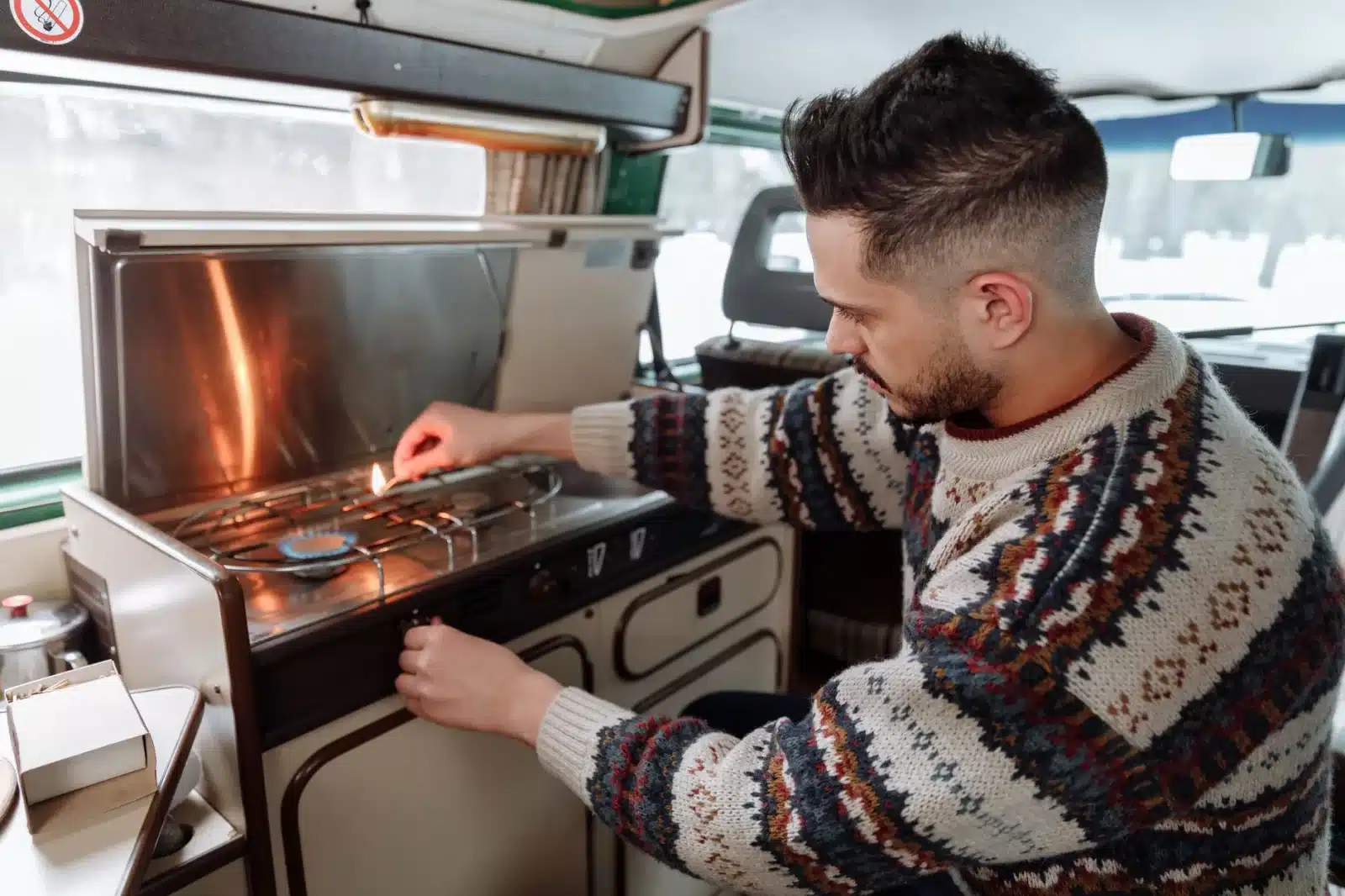
- A small gas stove for lunch breaks.
The problem: the stove, even if mobile, was considered a “fixed kitchen”. Result: VASP approval became mandatory. And a TVS bill of €2,000 a year (2026 rate for a 5 CV vehicle). Cost of the mistake: €6,000 over three years.
Which van models are best for a custom conversion?
Not all vans are equal when it comes to custom conversions. Here are the criteria to check before buying:
- Headroom. A Ford Transit Custom offers 1.80 m of usable height. Compared to 1.40 m for a Berlingo. “For a carpenter transporting 2.50 m planks, it’s essential,” notes a converter.
- Engine reliability. The 2.0 TDCi EcoBlue in the Transit Custom (130-170 hp) has a lifespan of 250,000 km without major work. The 1.6 HDi in the Berlingo, on the other hand, reaches 160,000 km. With a risk of head gasket failure after 165,000 km.
- Door width. A Sprinter has side doors 1.30 m wide. Compared to 0.80 m for a Jumpy. Handy for loading plasterboard.
Comparison: three vans suited to custom conversions
| Model | Usable height (m) | Side door width (m) | Reliability (out of 10) | New price (2026) |
|---|---|---|---|---|
| Peugeot Expert | 1.60 | 1.26 | 7.5 | €32,000 |
| Ford Transit Custom | 1.80 | 1.30 | 8.5 | €35,000 |
| Mercedes Sprinter | 1.90 | 1.30 | 8 | €40,000 |
Where to get your van converted in France
Several tradespeople specialise in custom conversions. For professionals:
- Espace V.U (Bordeaux). Specialises in wood linings for building trades. Average price: €1,800 for a van like the Jumpy.
- SD Services (Lyon). Offers modular solutions with aluminium rails. Budget: €2,500 to €4,000 depending on options.
- MDP Utilitaire (Île-de-France). Known for integrated workbenches. Price: €1,500 to €3,500.
“The most important thing is to visit the workshop before ordering. Some tradespeople use 12 mm plywood instead of 18 mm to cut costs. Which causes problems on long trips,” advises a customer. For those looking for turnkey solutions, plywood lining kits can also be an intermediate option.
Mistakes to avoid when converting a van
- Drilling the bodywork without protection. Untreated holes rust within months. Solution: apply anti-corrosion primer before screwing.
- Neglecting ventilation. A poorly ventilated van accumulates moisture. Result: the plywood swells. “I’ve seen floors warp in six months because of this,” says a bodywork specialist.
- Ignoring electrical standards. A 12V socket installed without a fuse can cause a fire. “For a compressor or saw, plan a dedicated circuit,” recommends an automotive electrician.
- Overloading the vehicle. A wood lining plus tools can add 200 to 300 kg. Check the GVW stays under 3,500 kg to keep your category B licence.
How much does a custom van conversion cost?
Prices vary depending on complexity and materials. Here are some examples:
| Service | Price (€) | Details |
|---|---|---|
| Full wood lining (shelves + worktop) | 1,200 – 2,500 | 18 mm marine plywood, rail-mounted |
| Integrated workbench | 800 – 1,500 | With lockable drawers and retention tray |
| 12V LED lighting | 150 – 300 | 3 spotlights + watertight switch |
| Soundproofing | 300 – 600 | Rock wool + vapour barrier |
“A basic conversion costs €1,500. For a van turned into a full workshop, expect €3,000 to €4,000,” explains a tradesperson. On a tight budget, a standard plywood lining kit can be a first step.
Van conversion: alternatives to wood
Wood isn’t the only option. Here are other materials used by professionals:
- Aluminium. Lightweight (three times lighter than wood) and corrosion-resistant. Ideal for vehicles exposed to water. Like those used by landscapers or pool technicians. Price: €80 to €120/m².
- Expanded PVC. Rot-proof and easy to clean. But less impact-resistant. Used for interior partitions. Price: €30 to €50/m².
- Composite (fibreglass). Ultra-resistant. But expensive (€150 to €200/m²). Reserved for high-end vans.
“For an electrician transporting coiled cables, aluminium is perfect. For a carpenter needing strength, wood is still unbeatable,” sums up a specialist. The choice also depends on the climate. In damp regions, aluminium or composite avoid mould problems.